
Chapters 1 and 2 ... A quick and easy guide to training ai models, outlining concepts from a beginner's point of view.
Chapter 1: Understanding Artificial Intelligence (AI)
Welcome to the Beginner's Guide to Training an AI Model. In this guide, we'll explore the basics of AI, from understanding its origins to delving into its various applications.
Chapter 2: Getting Started with AI
Before diving into the technical aspects of training an AI model, it's crucial to understand the basics. Let's start with a definition. Artificial Intelligence, or AI, is a field that aims to create intelligent machines that can perform tasks that typically require human-like intelligence.
Section A: Understanding AI
AI encompasses a wide range of applications, from simple rule-based systems to complex machine learning models. The first step in training an AI model is understanding its underlying principles.
Key Concepts:
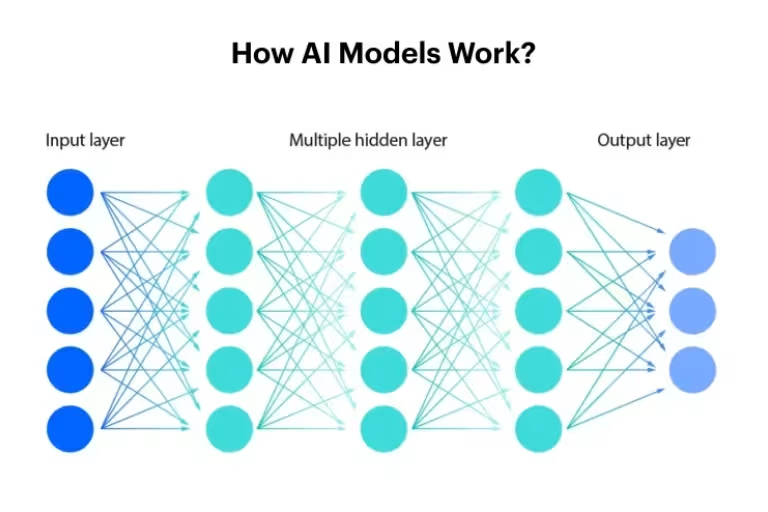
- Machine Learning (ML): ML is a subfield of AI that enables machines to learn from data and make predictions or decisions without explicit programming. It is based on the idea of training a model to recognize patterns and make accurate predictions.
- Data: Training an AI model requires large amounts of relevant data. The quality and quantity of the data play a significant role in the model's performance.
Section B: Exploring Applications of AI
AI has found its way into various industries and everyday applications. Some common applications include:
- Healthcare: AI is used in healthcare to analyze medical images, diagnose diseases, and recommend treatment plans.
- Transportation: AI is employed in self-driving cars, enabling them to navigate through complex environments safely.
- Entertainment: AI is used to develop recommendation systems that personalize content based on user preferences.
- Financial Services: AI is utilized for fraud detection, risk analysis, and trading.
Understanding the potential applications of AI can help you envision the types of models you can develop.
Moving on to the next chapter, we'll dive into the practical aspects of training an AI model. Stay tuned!
Chapter 2: Getting Started with AI
Before diving into the technical aspects of training an AI model, it's crucial to understand the basics. Let's start with a definition. Artificial Intelligence, or AI, is a field that aims to create intelligent machines that can perform tasks that typically require human-like intelligence.
Section A: Understanding AI
AI encompasses a wide range of applications, from simple rule-based systems to complex machine learning models. The first step in training an AI model is understanding its underlying principles.
Key Concepts:
- Machine Learning (ML): ML is a subfield of AI that enables machines to learn from data and make predictions or decisions without explicit programming. It is based on the idea of training a model to recognize patterns and make accurate predictions.
- Data: Training an AI model requires large amounts of relevant data. The quality and quantity of the data play a significant role in the model's performance.
Section B: Exploring Applications of AI
AI has found its way into various industries and everyday applications. Some common applications include:
- Healthcare: AI is used in healthcare to analyze medical images, diagnose diseases, and recommend treatment plans.
- Transportation: AI is employed in self-driving cars, enabling them to navigate through complex environments safely.
- Entertainment: AI is used to develop recommendation systems that personalize content based on user preferences.
- Financial Services: AI is utilized for fraud detection, risk analysis, and trading.
Understanding the potential applications of AI can help you envision the types of models you can develop.
Moving on to the next chapter, we'll dive into the practical aspects of training an AI model. Stay tuned!